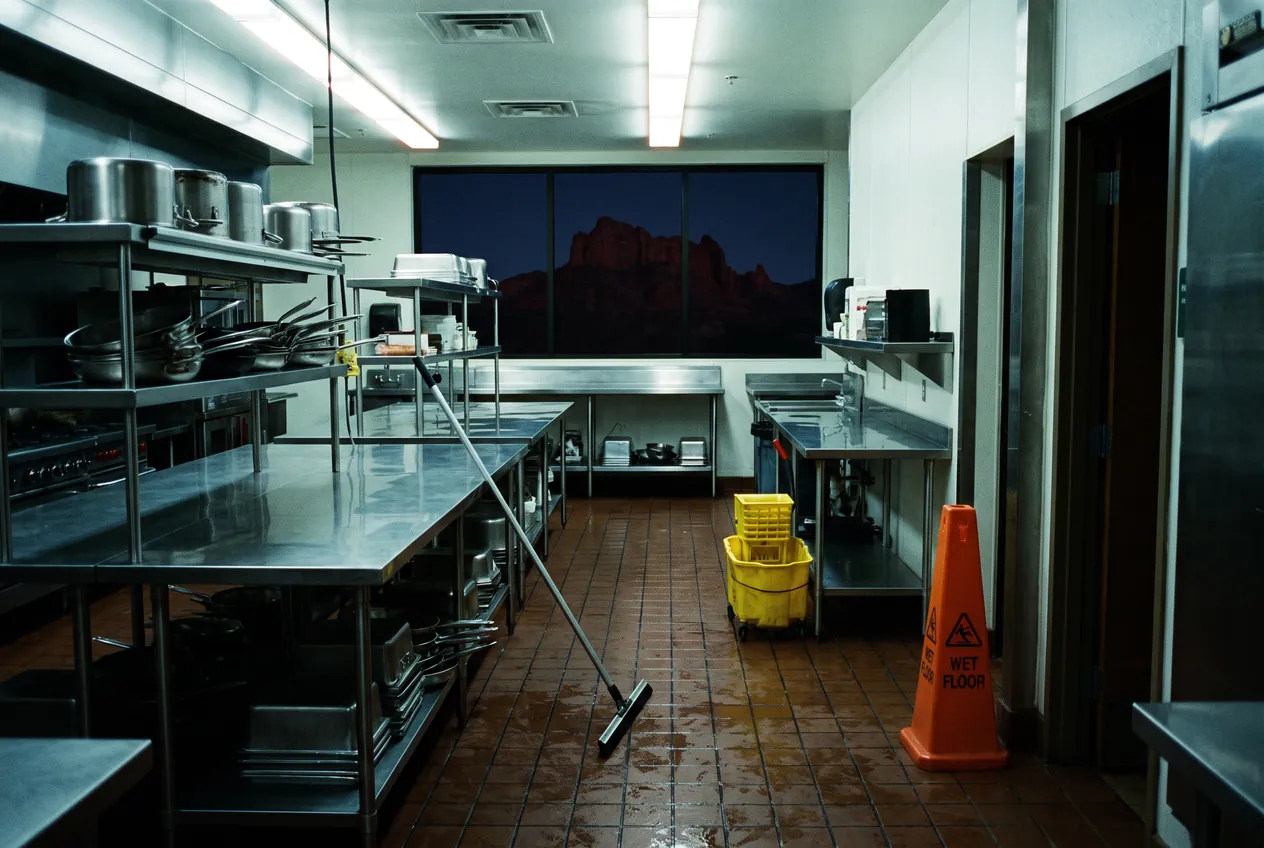
The route normally runs front to back. In the dining room, the crew wipes tables, chairs and booths, details the host stand and menus, cleans door and partition glass, dusts ledges and light fixtures, then vacuums or mops. Restrooms come next and deserve real care, since guests tend to judge the kitchen by what they see there. Then the kitchen floor gets degreased: product applied and given time to work, scrubbed with a deck brush or auto scrubber, then rinsed toward the floor drains. Mopping a greasy kitchen floor with plain water only spreads the film around.
The scope has to say clearly who does what. In most restaurants, kitchen staff clean food-contact surfaces, prep tables, cutting boards and cooking equipment as part of their own close, and the cleaning company covers floors, walls, restrooms, dining areas and non-food-contact surfaces. Some places hand over equipment exteriors or walk-in floors too, but only when it is written down. Kitchen exhaust hood and duct cleaning is a specialist service on a schedule set by fire code requirements and the hood company, and grease traps are pumped by specialist haulers. A nightly crew replaces neither.
The most common mistake is letting grease win. Floors that only get mopped build a slick layer that pulls in dirt, darkens grout and turns into a slip hazard for staff. Another is a crew that rushes the restrooms at the end of the night when they should be one of the main tasks on the list. Restaurants also face local health department inspections, so a cleaning scope that keeps floors, drains, walls and storage areas in steady condition is far easier to live with than a scramble the day an inspector walks in.
Running a restaurant close in St. George, from dining room to kitchen drains
Restaurants in St. George fight red dust at the front of the house and grease at the back. Fine sand blows in every time the door opens, settles on window ledges and booth tops, and gets ground into the dining room floor by evening. Once it reaches the kitchen, it mixes with grease into a gritty film that a mop alone will not lift. During the July and August monsoon storms, mud tracks across the entry mats and into the host stand area, so the nightly close needs a deliberate entry and floor pass rather than a quick sweep.
Restaurant cleaning almost always starts after close, once the kitchen staff has finished its own shutdown. Hospitality spaces and resort dining rooms that serve breakfast need the crew out before the morning prep shift arrives, which squeezes the window. Restaurants in Hurricane retail centers and around St. George often share parking lots and entries with neighbors, so note in the request who handles the sidewalk and any common corridor. A day porter can also keep restrooms in shape through the lunch and dinner rushes.
A typical restaurant cleaning schedule
| Task | Cadence |
|---|---|
| Dining room tables, chairs and booths | Nightly after close |
| Restroom cleaning and restocking | Nightly, with checks during service |
| Kitchen floor degreasing and drain areas | Nightly |
| Entry and door glass | Nightly inside, weekly outside |
| Kitchen walls and non-food-contact surfaces | Weekly |
| High dusting of vents and light fixtures | Monthly |
| Dining room floor deep scrub | Monthly to quarterly |
This is the starting specification. After the walk-through, the provider adjusts the cadence to how your building actually operates.
What the scope normally covers
- Dining room tables, chairs and booths
- Host stand, menus and waiting area
- Restroom cleaning, disinfecting and restocking
- Kitchen floor degreasing with rinse to drains
- Front door and interior glass
- Trash and recycling out to the dumpster
- Kitchen walls and splash zones away from food
- Mats lifted, cleaned and floor mopped underneath
The final task list and cadence get specified between you and the provider when the quote gets written up.
What sets the price of a restaurant close
- Kitchen size and grease load
- A busy fryer line puts far more grease on floors and walls than a cafe with light prep. Heavier grease means more degreaser, more dwell time and more scrubbing on every visit.
- Dining room size and layout
- Seat count, booths, bar areas and the amount of glass all add time. A small counter-service space finishes quickly, while a large full-service dining room takes a bigger crew.
- Nights per week and timing
- Seven-night coverage costs more than a few nights a week. A tight window between closing and the morning shift may also require more people on site to finish in time.
- Scope split with kitchen staff
- The more the cleaning company takes over, such as equipment exteriors, walk-in floors or deep kitchen wall work, the larger the scope. A clear written split keeps the quote accurate.
Related services in St. George
- Floor Care in St. George
- Disinfection Services in St. George
- Day Porter Services in St. George
- Commercial Window Cleaning in St. George
Cleaning for other types of business in St. George
- Church Cleaning in St. George
- School and Daycare Cleaning in St. George
- Warehouse Cleaning in St. George
Guides
Where requests tend to come from
Businesses across the St. George metro send us restaurant cleaning requests, from St. George, Washington, Hurricane, Ivins, Santa Clara, La Verkin and the surrounding towns. See all areas.