Three words get mixed up on these jobs. Plain cleaning lifts soil and grime off a surface using detergent, water and a cloth or mop. Sanitizing lowers the number of germs on a surface and is common on toys and food-contact surfaces. Disinfecting uses a stronger product meant for surfaces like restroom fixtures and changing tables. Sanitizers and disinfectants used in schools are registered with the U.S. EPA, and each label lists a contact time, meaning how long the surface has to stay wet. Wiping a surface dry before that time is up means the product never got the chance to do what its label describes.
A daycare runs on its own written routine, and the crew should work from it. Child care licensing rules and the local health department set sanitation expectations for centers, so the director usually already knows which items get sanitized daily and which get disinfected. The cleaning company fits around that plan: toys and cots or mats where staff hand them off, changing tables and the floor beneath them, sinks, door handles, and every low shelf and table edge at child height. Schools follow the same idea on a bigger footprint, with desks, restroom fixtures, drinking fountains and cafeteria tables on the nightly list.
Mistakes often start with products. A strong-smelling disinfectant used at night can still hang in a classroom at morning drop-off, so many schools and centers ask for low-odor or fragrance-free options. Another mistake is leaving deep work until it cannot wait. Refinishing a hallway floor or extracting classroom carpet needs drying time, which is why that work belongs in summer or winter break and not on a weeknight. The last is skipping questions about people. Asking how cleaning staff are screened, whether background checks are run and who will hold keys is reasonable and common in any building used by children.
Cleaning St. George classrooms and daycares through dust and monsoon season
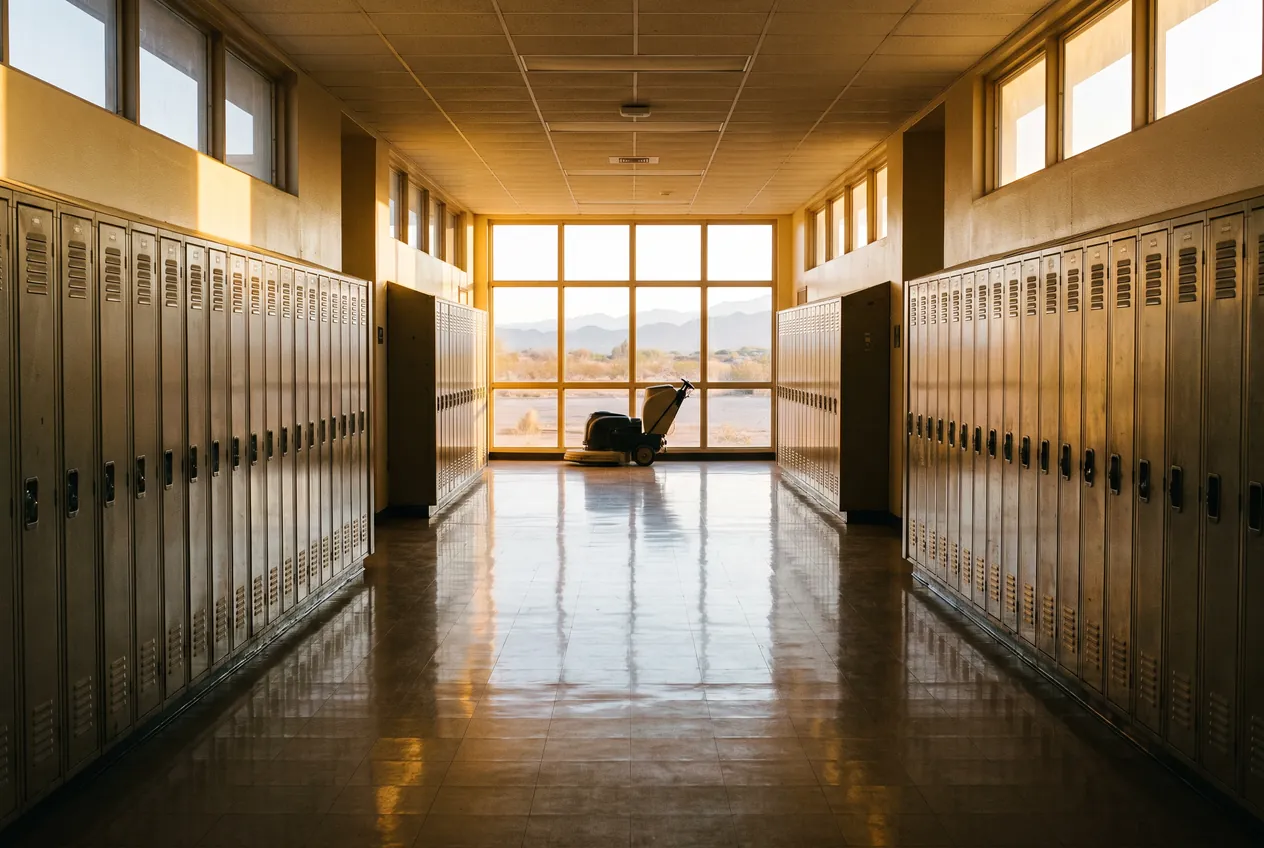
St. George schools and daycares deal with the same red sand that coats every other building in town, and children carry in more of it than most visitors. It arrives from playgrounds and pickup lines on shoes, backpacks and jackets, then settles on cubbies, window sills and the carpet circles where kids sit on the floor. Long dry stretches leave entry mats loaded with grit that grinds into the hallway finish. When the short monsoon storms hit in July and August, wet mud from play yards and parking lots travels into classrooms, so entries and hallways need a deliberate pass every night.
The cleaning window opens once the last child is picked up and any after-school program has cleared out, which can run late at a daycare with extended hours. Schools usually plan floor refinishing and carpet extraction for summer break, with a lighter round of deep work over winter break. Requests come from private and charter schools and from daycare and preschool centers in St. George, Washington, Santa Clara, Ivins and Hurricane.
A typical school and daycare cleaning schedule
| Task | Cadence |
|---|---|
| Classroom trash, desks and floors | Nightly on school days |
| Restrooms cleaned and disinfected | Nightly, with daytime checks |
| Daycare toys, cots or mats | Daily, following the center's routine |
| Diaper changing areas | Daily, with staff cleaning between uses |
| Cafeteria tables and floors | After each school day |
| Gym floor dust mopping | Nightly or several times a week |
| Floor refinishing and carpet extraction | Summer and winter breaks |
This is the starting specification. After the walk-through, the provider adjusts the cadence to how your building actually operates.
What the scope normally covers
- Classroom trash, desks and floors
- Restroom cleaning, disinfecting and restocking
- Cafeteria tables, chairs and floors
- Hallway and entry floor care
- Daycare toys, mats and cots, as scoped
- Changing tables and the floors around them
- Low surfaces and door handles at child height
- Gym and front office cleaning
The final task list and cadence get specified between you and the provider when the quote gets written up.
What shapes the price of school and daycare cleaning
- Building size and room mix
- Classrooms, restrooms, a cafeteria and a gym each take a different amount of time. A small preschool with a few rooms is a short visit, while a full K-12 campus needs a larger crew.
- Sanitizing and disinfecting scope
- How many toys, mats, cots and changing areas the crew handles, and how often, has a large effect. A clear split with the center's own staff keeps the scope accurate.
- Floor types
- Carpet in reading corners, VCT in hallways and a gym floor each need different equipment and care. Break-period refinishing and extraction are usually quoted separately from nightly work.
- Hours and staffing requirements
- Late pickup times shorten the cleaning window, which may mean more people on site. Requests for screened staff, a consistent crew or specific products can also affect the quote.
Related services in St. George
- Disinfection Services in St. George
- Floor Care in St. George
- Commercial Carpet Cleaning in St. George
- Janitorial Services in St. George
Cleaning for other types of business in St. George
Guides
Where requests tend to come from
Businesses across the St. George metro send us school and daycare cleaning requests, from St. George, Washington, Hurricane, Ivins, Santa Clara, La Verkin and the surrounding towns. See all areas.