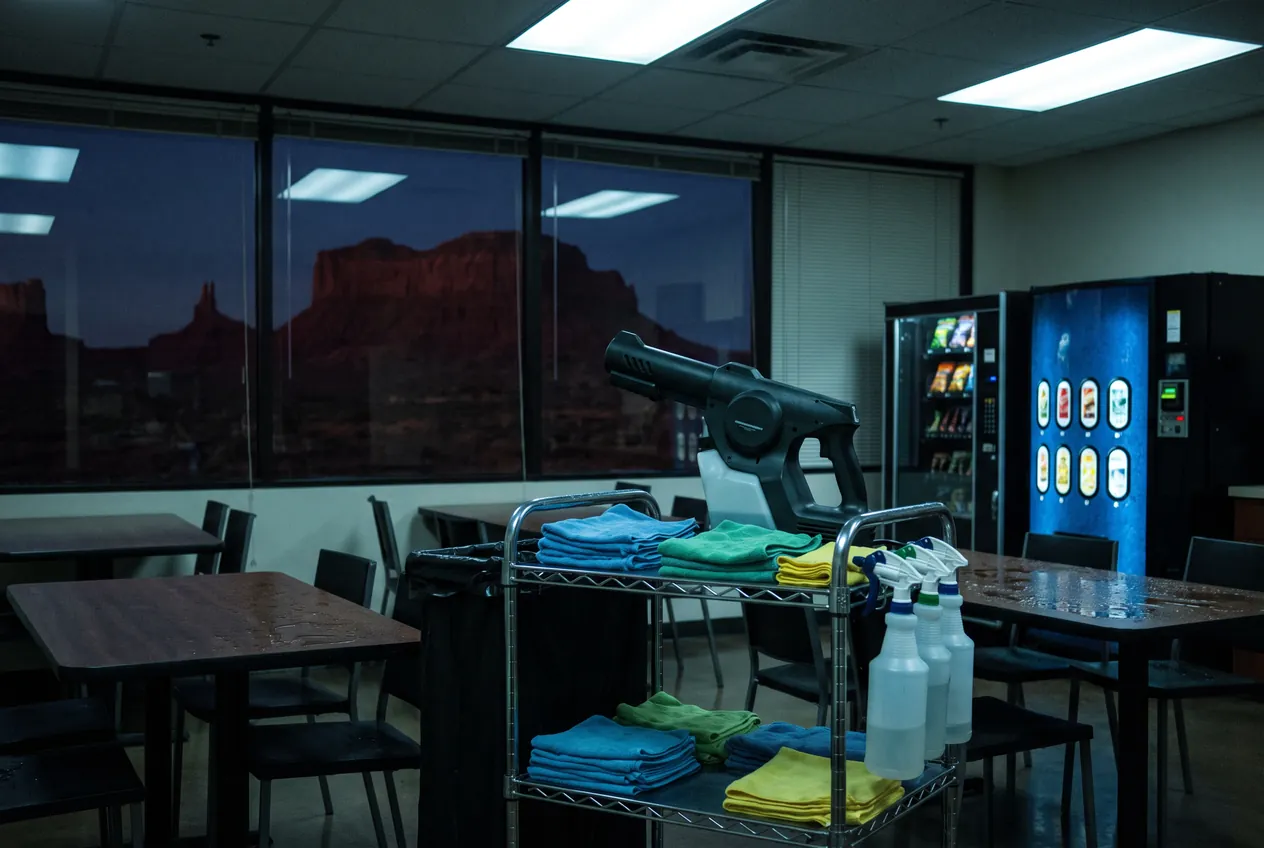
Disinfectant does not work through dirt. A film of grease, dust or residue shields whatever is underneath, so the surface has to be cleaned before it is disinfected, either with a separate cleaner or with a product labeled as a one-step cleaner and disinfectant used exactly as that label describes. Then comes the part most crews rush: contact time, sometimes called dwell time. Every disinfectant registered with the U.S. EPA lists how long the surface must stay visibly wet. Spraying and immediately wiping dry does not meet that time, and a disinfectant that never sits long enough is just an expensive cleaner.
Most of the value sits on a short list of surfaces people touch all day: door handles and push plates, light switches, elevator buttons, faucet and flush handles, counters, breakroom appliance handles, shared phones and keypads, and the arms of waiting room chairs. A good checklist names those points room by room so the route hits them in order. Electrostatic sprayers put out a charged mist that wraps around curved and hard-to-reach surfaces, which helps coverage in large rooms. They do not change the chemistry, though. The surface still has to be clean first and stay wet for the full label contact time.
Routine commercial disinfection is not biohazard cleanup. Significant blood or bodily fluid incidents, crime and trauma scenes, sewage backups and similar events belong to specialist remediation companies with the training, protective equipment and disposal arrangements for that work, and a janitorial crew should not take them on. The other common mistake is overselling: no honest provider can promise that disinfection prevents illness. What a disciplined program does is put the right product on the right surfaces, the right way, every visit, with logs that show the work actually happened.
Building a disinfection route for Washington County facilities
The clean-first rule carries extra weight in St. George. Red dust settles on counters, handrails and door hardware almost year-round, and a disinfectant sprayed onto that fine layer is fighting through grit instead of reaching the surface. Routes here usually wipe high-touch points clean before any disinfectant goes on. The building mix shapes the work too. Multi-tenant medical buildings and Washington medical campuses tend to want disinfection built into every visit, while resort properties and hospitality spaces with round-the-clock breakrooms need their high-touch points covered more than once in a day.
Scheduling usually follows occupancy. Single-tenant professional offices and retail typically fold high-touch disinfection into the evening janitorial visit, so it is done before staff arrive. Buildings that stay busy all day, including clinics and resort common areas, often add a daytime pass by a porter on restrooms, door hardware and front counters. A separate electrostatic treatment of a whole space is usually booked after hours or on a weekend so the product can sit for its full contact time without foot traffic.
What drives the cost of a disinfection scope
- Number of touch points
- A suite with a few doors and one restroom is quick. Buildings with many restrooms, exam rooms, shared workstations or a large lobby add surfaces that each need cleaning and full contact time.
- Frequency and timing
- A pass folded into nightly janitorial work costs less than a dedicated visit. Daytime passes, several passes per day or weekend treatments all add labor and scheduling.
- Application method
- Wipe-and-dwell work by hand suits small spaces. Electrostatic spraying covers large areas faster but adds equipment, and the room has to be cleared while the product sits.
- Facility type and specifications
- Medical suites, food service areas and childcare spaces may specify particular products, color-coded cloths or written records. Meeting those specifications takes more time and training than a general office route.
A typical disinfection schedule
| Task | Cadence |
|---|---|
| Restroom fixtures, handles and dispensers | Each visit, more in busy buildings |
| Door hardware, switches and push plates | Each visit |
| Breakroom counters and appliance handles | Each visit |
| Shared phones, keypads and touchscreens | Daily to a few times a week |
| Waiting room chairs and front counters | Each visit |
| Electrostatic treatment of whole rooms | Monthly or on request |
| Review of products and contact times | Once or twice a year |
This is the starting specification. After the walk-through, the provider adjusts the cadence to how your building actually operates.
What the scope normally covers
- Surfaces cleaned before disinfectant goes on
- EPA-registered disinfectant suited to each surface
- Label contact time followed on every surface
- High-touch checklist written room by room
- Restroom fixtures, handles and dispensers
- Breakroom counters, sinks and appliance handles
- Electrostatic application where scoped
- Visit logs showing completed checklists
The final task list and cadence get specified between you and the provider when the quote gets written up.
Commercial Disinfection Services by type of business
Where requests tend to come from
Businesses across the St. George metro send us disinfection requests, from St. George, Washington, Hurricane, Ivins, Santa Clara, La Verkin and the surrounding towns. See all areas.
Other cleaning services in St. George
- Commercial Cleaning in St. George
- Office Cleaning in St. George
- Janitorial Services in St. George
- Medical Office Cleaning in St. George
- Floor Care in St. George
- Post-Construction Cleaning in St. George
- Day Porter Services in St. George
- Commercial Carpet Cleaning in St. George
- Commercial Window Cleaning in St. George