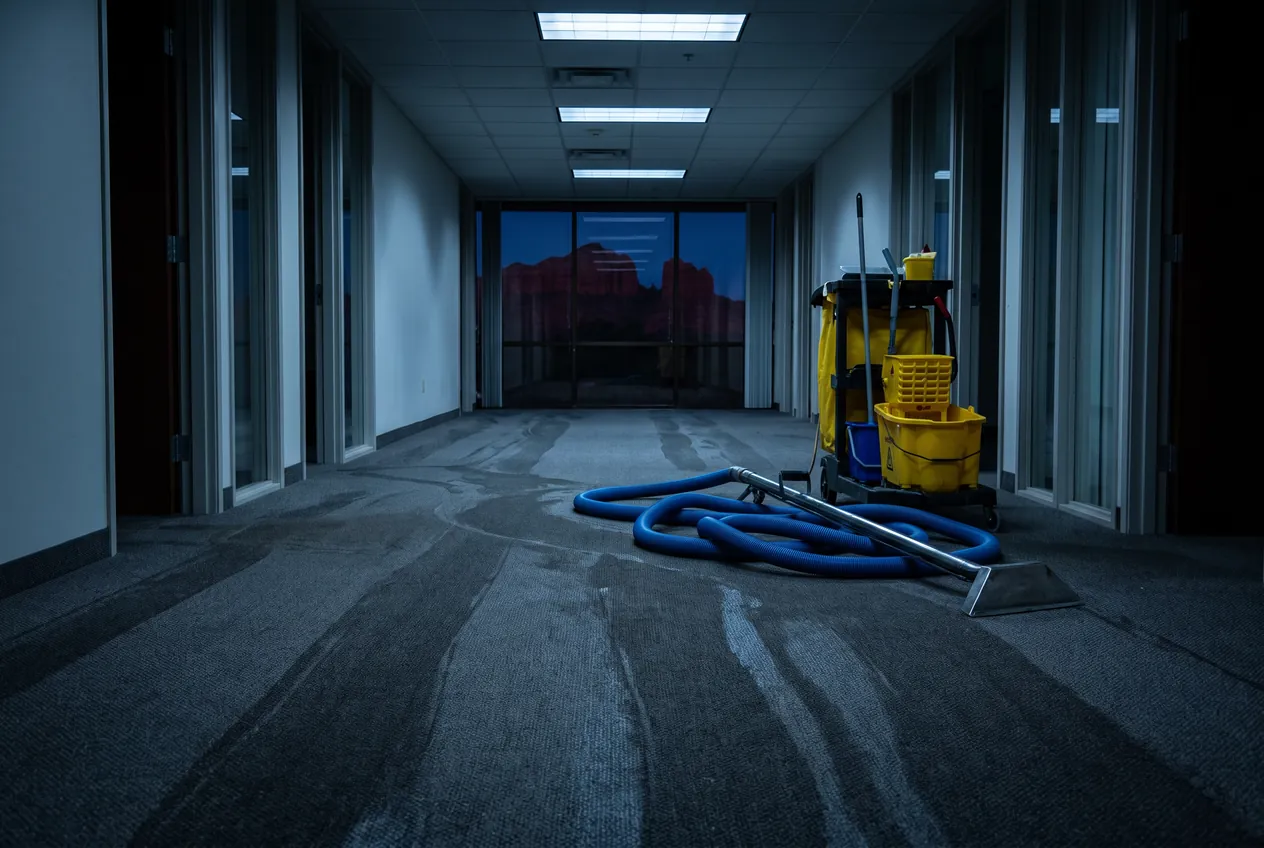
The work starts before any machine touches the carpet. A slow, overlapping pre-vacuum pulls out the dry soil, which makes up most of what sits in a commercial carpet, and wet cleaning on top of loose grit just turns it into mud. Next comes spot treatment for coffee, toner and gum, then a pre-spray worked into the traffic lanes. Only then does the extraction wand go down, rinsing hot water through the pile and pulling it straight back out. A crew that skips the pre-vacuum to save time leaves carpet that looks fine for a week and gray again by month end.
Encapsulation fills the gap between deep cleans. A low-moisture chemistry is brushed into the pile with a rotary or cylindrical machine, it dries into a brittle residue around the soil, and the next routine vacuuming lifts it out. Dry time is short, often an hour or two with decent airflow, which makes it a practical interim pass for a lobby or open office. It does not replace extraction. Carpet that only ever gets encapsulated slowly loads up with residue near the backing, and the next full extraction has more to rinse out. Most programs alternate the two methods on a calendar.
The common mistakes are predictable. Overwetting is the big one: too much water and too little recovery leaves the pad damp, stretches the dry time and can bring stains wicking back up a day later. Another is cleaning only when the carpet looks bad, by which point the traffic lanes have already worn and no method brings the pile back. Entry matting gets ignored too, even though a mat long enough to take several steps stops much of the soil at the door. IICRC is an industry body that certifies carpet cleaning technicians, and asking whether the crew has that training is a fair question.
Keeping carpet on a cycle against Washington County red sand
Red sand is the reason carpet in St. George buildings needs a tighter cycle. The fine, abrasive grit blows in almost year-round, settles deep in the pile and cuts at the fibers every time someone walks across it, so the lane from the front door to the reception desk wears long before the rest of the floor. Then the July and August monsoon storms add a different load: wet mud carried straight over the threshold, which sets into a stain if it sits. A program here leans on frequent vacuuming, deep entry mats and extraction timed after storm season.
Timing is the first scheduling question most facility managers raise. Extraction leaves the carpet damp for hours, so most crews book it after close, on a Friday night or ahead of a long weekend. Multi-tenant offices in Ivins and medical buildings in Washington often stage the work suite by suite so no tenant loses its floor during business hours. Resort properties and other spaces open around the clock tend to lean on encapsulation in busy areas, with extraction blocked into slower overnight windows.
What moves a carpet cleaning quote
- Square footage and layout
- Open floor plans go quickly, while private offices, cubicle runs and narrow corridors slow the crew down, because every room means repositioning hoses and equipment around walls, doorways and desks.
- Soil level and time since the last clean
- Carpet that has gone a long stretch without extraction needs heavier pre-treatment and slower passes. A floor kept on a regular cycle cleans faster each time because the soil never gets packed in.
- Method and dry-time needs
- Extraction and encapsulation use different equipment and labor. A request for fast return to service, extra air movers or work split across several nights adds to the scope.
- Furniture and access
- Moving desks, chairs and filing cabinets adds labor. Limited after-hours access, distant water hookups or no nearby parking for a truck-mounted unit also change how the job gets staffed.
A typical commercial carpet cleaning schedule
| Task | Cadence |
|---|---|
| Thorough vacuuming of entries and traffic lanes | Each cleaning visit |
| Spot and stain treatment | Weekly, or as spills happen |
| Entry mat cleaning or swap | Weekly |
| Low-moisture encapsulation in traffic lanes | Monthly to quarterly |
| Hot water extraction of high-traffic areas | Every 3 to 6 months |
| Full wall-to-wall extraction | Every 6 to 12 months |
| Entry extraction after storm season | Once the summer storms end |
This is the starting specification. After the walk-through, the provider adjusts the cadence to how your building actually operates.
What the scope normally covers
- Slow pre-vacuum with edge and corner detail
- Spot treatment for coffee, toner and gum
- Traffic lane pre-spray and agitation
- Hot water extraction, truck-mounted or portable
- Low-moisture encapsulation between deep cleans
- Light furniture moved and replaced where agreed
- Air movers set out to speed drying
- Entry mat cleaning and placement advice
The final task list and cadence get specified between you and the provider when the quote gets written up.
Commercial Carpet Cleaning by type of business
Where requests tend to come from
Businesses across the St. George metro send us commercial carpet cleaning requests, from St. George, Washington, Hurricane, Ivins, Santa Clara, La Verkin and the surrounding towns. See all areas.
Other cleaning services in St. George
- Commercial Cleaning in St. George
- Office Cleaning in St. George
- Janitorial Services in St. George
- Medical Office Cleaning in St. George
- Floor Care in St. George
- Post-Construction Cleaning in St. George
- Day Porter Services in St. George
- Commercial Window Cleaning in St. George
- Disinfection Services in St. George